

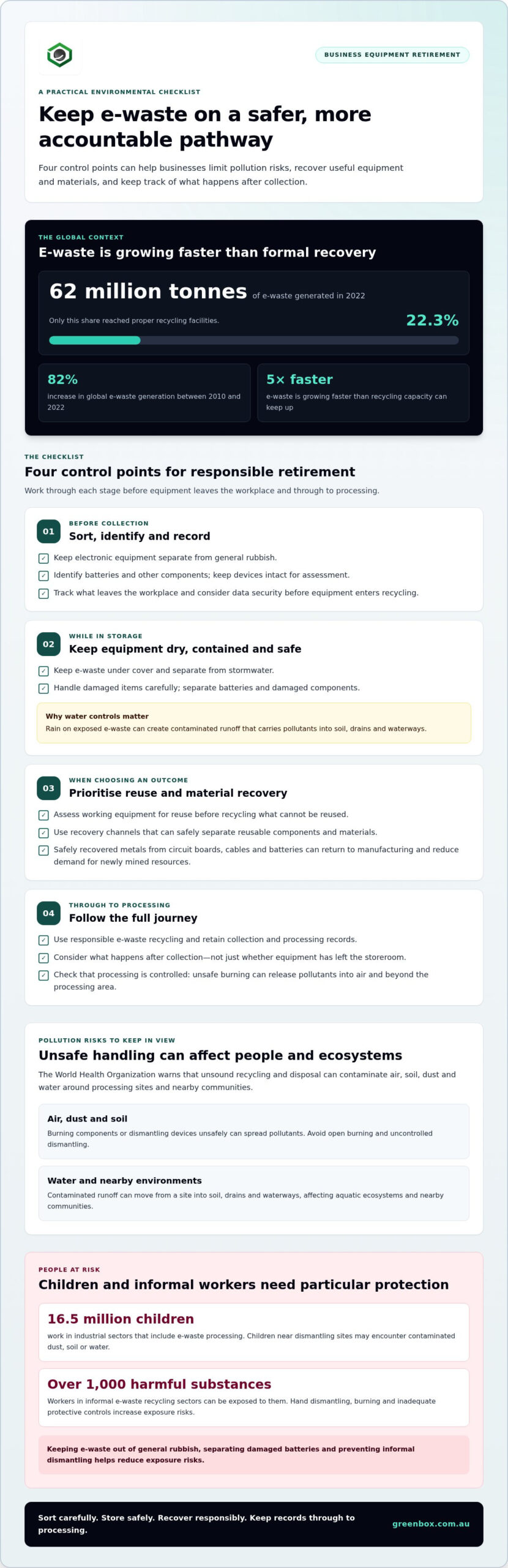
The world generated 62 million tonnes of e-waste in 2022, and only 22.3% reached proper recycling facilities. That is the scale behind the environmental impact of corporate e-waste: discarded devices can waste recoverable materials and expose people and ecosystems to pollution when they’re handled unsafely.
It’s easy to see old technology as an operational problem once it’s no longer useful. But how a business manages equipment at end of life also affects resource recovery, data security and communities exposed to unsafe recycling and disposal. Disposable electronics add to the pressure by sending more short-lived devices into the waste stream.
This article explains how corporate e-waste affects the environment and vulnerable communities, why disposable electronics make the problem worse, and what businesses and individuals can do to reduce harm. It also covers how responsible recovery, reuse and recycling keep valuable materials in circulation and support more considered technology lifecycles.
Key Takeaways
- Understand how unsafe e-waste handling can pollute local environments and affect workers and nearby communities.
- Extend device lifecycles through repair, reuse and recovery before equipment becomes waste.
- Recognise why short-lived electronics add pressure to waste streams and can squander valuable materials.
- Plan business equipment retirement around secure data handling and responsible recovery of usable assets.
What Can Individuals and Businesses Do About E-Waste?
For businesses, responsible e-waste management starts before equipment leaves the workplace. Separate obsolete devices from general rubbish, identify batteries and other components, and keep items intact for assessment. These steps make reuse and material recovery more practical and reduce the risk of damaged equipment entering uncontrolled waste streams. Individuals can also keep old phones, computers and accessories out of household bins by using appropriate e-waste recycling options.
Air pollution can arise when e-waste is burned or processed unsafely. The World Health Organization warns that unsound recycling and disposal can release toxic pollutants that contaminate air, soil, dust and water at recycling sites and in nearby communities. Burning components to recover materials can spread pollutants beyond the processing area. Waste businesses can reduce these risks by preventing open burning and using controlled processes to handle and recover materials.
Water pollution is another concern. When waste is exposed to rain, contaminated runoff can carry pollutants from a site into soil, drains and waterways, affecting aquatic ecosystems and nearby communities. Keep e-waste under cover, separate it from stormwater and handle damaged items carefully. These controls help limit the spread of contaminants around storage and processing areas.
Businesses can build environmental safeguards into each stage of equipment retirement:
- Sort and record: Keep electronic equipment separate from general waste and track what leaves the workplace.
- Protect storage areas: Keep devices dry and contained, with batteries and damaged components handled separately.
- Choose recovery over disposal: Assess working equipment for reuse before recycling materials that cannot be reused.
- Follow the chain: Use responsible e-waste recycling and retain records of collection and processing.
The World Health Organization warns that exported e-waste may be dismantled or recycled where environmental safeguards are absent or poorly followed. For Australian businesses, responsible handling means considering the full journey after collection, not simply clearing equipment from a storeroom. Clear records, careful storage and recovery-focused decisions help reduce pollution risks and keep useful materials in circulation.
Health risks to children and vulnerable communities
Children can face greater risks when e-waste is dismantled near homes, schools or informal work sites. An estimated 16.5 million children work in industrial sectors that include e-waste processing. Contact with contaminated dust, soil or water can expose children to hazardous substances while they play, learn or help adults.
The World Health Organization warns that unsound e-waste recycling and disposal can contaminate air, soil, dust and water around processing sites. Pollutants can travel beyond the work area, exposing nearby residents through breathing, contact with contaminated surfaces, or contaminated food and water. Communities with limited access to safe housing and clean water may have fewer ways to avoid exposure.
Informal recycling workers may dismantle devices by hand, burn materials or work without adequate protective controls. Workers in informal e-waste recycling sectors can be exposed to over 1,000 harmful substances. Breaking screens, circuit boards and batteries can release dust or residues directly into workspaces, while burning components creates additional exposure. Children who live or work nearby may also encounter materials brought home on clothing, tools or equipment.
Australia’s National Television and Computer Recycling Scheme covers televisions, computers, printers and computer peripherals. It does not cover every type of electronic equipment, so devices outside those categories need another suitable end-of-life route.
Commercial e-waste recycling costs depend on the circumstances, with pricing provided after a quote request. Relevant factors include equipment types and volumes, collection and transport needs, and any handling or data-security requirements.
Businesses can reduce exposure risks by keeping e-waste out of general rubbish, separating damaged batteries and preventing informal dismantling. Clear records of equipment movements also help maintain oversight from collection through processing. For organisations planning responsible end-of-life handling, secure equipment recovery options can support a more controlled pathway.
How much e-waste does the world produce each year?
The world generated 62 million tonnes of e-waste in 2022. Only 22.3% reached proper recycling facilities, leaving most outside formal recovery systems. Global e-waste generation increased by 82% between 2010 and 2022. E-waste is growing five times faster than recycling capacity can keep up. The environmental impact of corporate e-waste reflects this widening gap between discarded equipment and responsible processing.
Responsible recycling separates devices into recoverable materials and components that need careful handling. Metals in circuit boards, cables and batteries can return to manufacturing when processors extract them safely. Recovered materials can reduce demand for newly mined resources, while reuse can extend a device’s useful life. Businesses can support these outcomes by sorting equipment, keeping records and directing retired assets into accountable recovery channels.
Exporting e-waste can shift processing risks to communities where environmental safeguards are absent or poorly followed. The World Health Organization warns that exported equipment may be dismantled or recycled in these conditions. Unsafe processing can contaminate air, soil, dust and water, while valuable materials may be lost instead of recovered.
Data security also matters when retiring equipment. Before devices enter recycling, businesses should identify storage media and ensure information is sanitised or destroyed through an appropriate process. This keeps data security distinct from material recovery. Clear asset records help organisations track equipment through collection, processing and final recovery, rather than treating disposal as an undocumented hand-off.
For a practical business approach, inventory retired computers, screens, printers and peripherals. Separate reusable equipment from items needing recycling, and keep batteries or damaged devices apart for careful handling. Record each asset’s destination and retain processing documentation. These steps make environmental performance more visible and help identify equipment that can be reused before materials are recovered. Reducing the environmental impact of corporate e-waste starts with planned decisions that keep resources in circulation and prevent uncontrolled disposal.
Why Are Disposable Electronics Making the Problem Worse?
Disposable electronics add short-lived devices to waste streams, even though they contain materials that could be recovered. Vaping devices illustrate how a compact product can combine useful resources with components needing careful end-of-life handling.
Valuable and Hazardous Device Materials
Electronic devices contain valuable materials, including gold and copper, alongside components that need careful handling, such as lithium batteries. Circuit boards contain metals that can be recovered through appropriate processing. Discarding a whole device can waste resources, while careless dismantling can create pollution risks. Keeping equipment intact until it reaches suitable processing supports safer recovery and retains materials for future manufacturing.
Hazards in Discarded Electronics
Discarded electronics can contain hazardous components that pose risks when devices are damaged, dismantled or disposed of unsafely. Batteries may be punctured during handling, while breaking circuit boards can release residues into work areas. Separating battery-powered devices and keeping damaged items apart from intact equipment helps workers identify materials requiring controlled handling. It also reduces the chance of components being mixed into general rubbish.
Disposable vaping devices make the issue more visible. They contain 286,000 pounds of lithium annually, with less than 5% recovered through recycling. The vaping industry’s projected annual growth rate is 31%. As demand grows, more short-lived devices introduce batteries and electronics into waste streams, despite the resources they hold. Their compact design can also make batteries less obvious during routine sorting.
Businesses should apply the same care to small peripherals and battery-powered equipment. Before disposal, assess whether devices can remain in use or be transferred for another use. Keep batteries and damaged electronics separate, and record where retired assets are sent. These decisions distinguish reusable equipment from items needing material recovery and make waste handling more visible across the organisation.
Review your organisation’s approach to battery-containing electronics, then arrange responsible e-waste recycling to support controlled material recovery.
Greenbox: Data Sanitisation and Destruction
Greenbox helps businesses manage retired technology through Data Sanitisation and Destruction and IT Asset Recovery. These services support organisations handling equipment that may contain sensitive information or still hold value for reuse. Data sanitisation and destruction address information stored on devices, while asset recovery helps businesses manage equipment at end of life.
When assets remain suitable for another use, Asset Remarketing can return them to circulation instead of treating every retired device as waste. This connects secure equipment retirement with a more resource-conscious technology lifecycle. Businesses can consider this option when replacing workplace computers, screens or other IT equipment.
For a practical next step, contact Greenbox to discuss your organisation’s end-of-life IT assets and data handling needs.
Build responsible technology decisions into your next upgrade
Reducing the environmental impact of corporate e-waste starts with treating equipment retirement as part of technology planning, not an afterthought. Set clear internal processes to decide what can remain in use, what needs secure data handling and what should go to recovery. This gives teams a consistent approach whenever devices are replaced and makes responsible outcomes part of everyday operations.
Greenbox offers Data Sanitisation and Destruction, IT Asset Recovery, and Pre-Configuration and Imaging. These services support different stages of business technology management, from preparing equipment for deployment to handling retired assets. Including these decisions in upgrade planning helps align operational needs, information security and resource stewardship.
Consider your upcoming equipment changes and identify where a structured approach could help. Contact Greenbox about e-waste to discuss your organisation’s needs and next steps. Thoughtful planning can help businesses move towards a more responsible technology lifecycle.
Frequently Asked Questions
How Big Is the E-Waste Crisis Right Now?
Global e-waste generation increased by 82% between 2010 and 2022, while e-waste is growing five times faster than recycling capacity can keep up. That gap means more discarded equipment is accumulating outside formal recovery systems. For businesses, the scale makes routine asset tracking and planned equipment retirement important: otherwise, devices can leave the organisation without a clear route for reuse or responsible processing.
Why is e-waste recycling not enough to solve the problem?
Recycling handles equipment after it becomes waste, but it cannot prevent unnecessary purchases or extend devices’ working lives. Processing also needs careful controls to protect workers and the surrounding environment. Businesses can reduce pressure on recycling systems by maintaining equipment, considering reuse before disposal and choosing devices with longer useful lifecycles. Recycling remains essential for end-of-life equipment, but works best alongside waste prevention.
How does e-waste affect the environment?
E-waste can pollute the environment when equipment is burned, dismantled or dumped without suitable controls. Producing one ton of laptops generates ten tons of carbon dioxide, so manufacturing replacement devices also adds to the environmental burden. Recovering components and extending existing equipment’s useful life can reduce demand for new production. Safe processing helps limit pollution and return usable materials to circulation.
Who Suffers Most From E-Waste Contamination?
Informal recycling workers and people living near unsafe processing sites face direct exposure risks. Children are especially vulnerable when contaminated dust or materials reach homes, play areas or workplaces. Exposure can also affect families when workers carry residues home on clothing or tools. The World Health Organization identifies air, soil, dust and water contamination around unsound recycling and disposal sites as significant exposure pathways.
How much e-waste do Australian businesses generate each year?
For an Australian business, annual e-waste depends on the equipment fleet, replacement cycle and what happens to retired devices. Estimate it by recording the type, number and weight of computers, screens, printers and peripherals leaving the organisation each year. Separate reused or remarketed assets from those sent for recycling. This creates a practical baseline for tracking changes and improving retirement decisions.
What environmental harms result from corporate e-waste in Australia?
Corporate e-waste can contribute to pollution when devices are dumped or processed unsafely, and it wastes recoverable materials when valuable components aren’t reclaimed. A business sending mixed equipment into general waste, for example, loses visibility over its eventual handling. Battery-powered devices and data-bearing equipment also need distinct retirement plans, so each asset can be directed towards suitable reuse, secure processing or material recovery.