

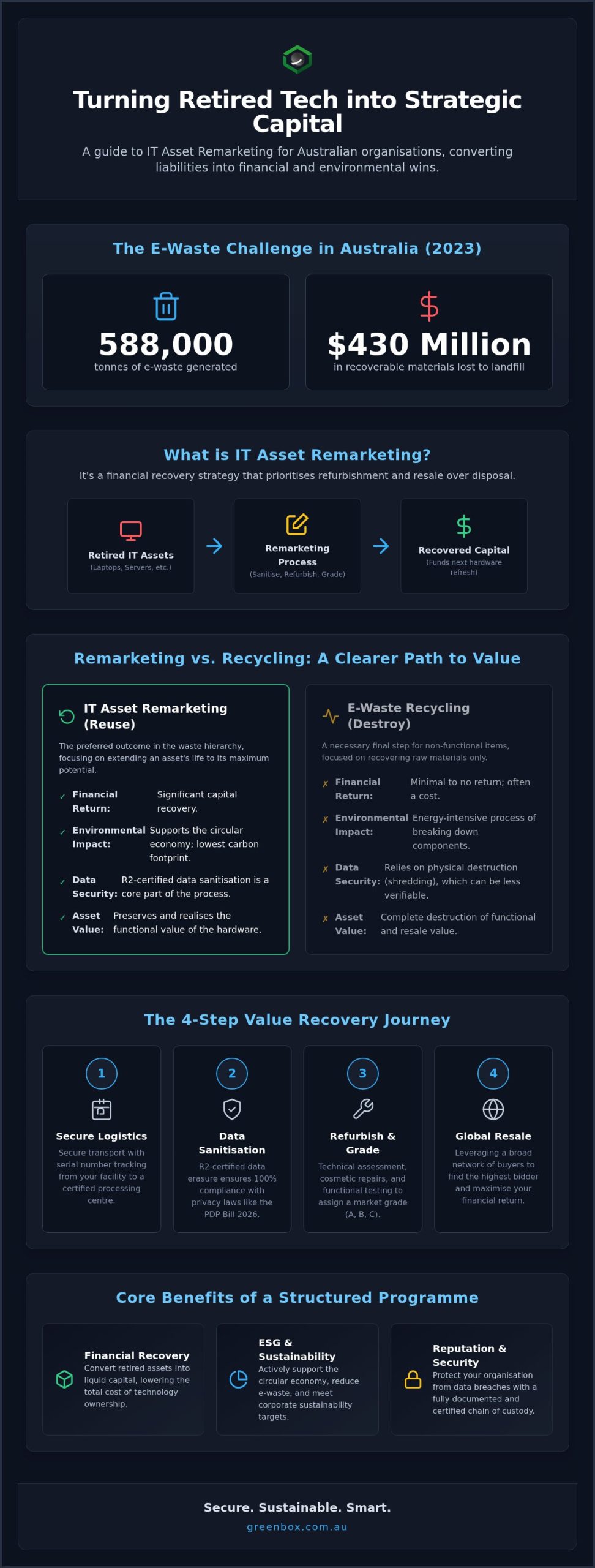
Australia generated 588,000 tonnes of e-waste in 2023, yet an estimated $430 million in recoverable materials is lost to landfill every year. For many Australian organisations, the end of Windows 10 support has triggered a massive hardware refresh wave, leaving storerooms filled with retired laptops and servers. You likely feel the pressure of rising technology costs and the anxiety of potential data breaches if these devices aren’t handled correctly. Understanding what is IT asset remarketing allows you to pivot from seeing retired gear as a liability to viewing it as a strategic financial asset.
We’ll show you how a structured remarketing programme recovers significant capital while ensuring 100% compliance with the Privacy Amendment (Personal Data Protection) Bill 2026. You don’t have to choose between your bottom line and your ESG targets. This guide explores how R2-certified sanitisation and the circular economy work together to protect your reputation and your budget. We’ll examine the full lifecycle of value recovery, moving from secure logistics and data destruction to final resale in the global marketplace.
Key Takeaways
- Discover what is IT asset remarketing and how it converts decommissioned technology into liquid capital to fund your next hardware deployment.
- Learn the critical role of R2-certified data sanitisation in maintaining a secure chain of custody and protecting your corporate reputation.
- Understand why refurbishing assets for the circular economy provides a superior environmental and financial outcome compared to standard e-waste recycling.
- Identify the specific steps needed to maintain “Grade A” resale potential, including preserving original packaging and maintaining accurate asset registers.
- Navigate Australia’s evolving regulatory landscape, ensuring your disposal processes comply with the Privacy Amendment (Personal Data Protection) Bill 2026.
Defining IT Asset Remarketing in the Modern Lifecycle
To understand what is IT asset remarketing, one must view it as a sophisticated financial recovery strategy rather than a simple disposal task. While traditional e-waste management often focuses on breaking down devices for scrap, remarketing prioritises the refurbishment and resale of retired technology to recoup capital. This process sits at the apex of the IT Asset Disposition (ITAD) framework, offering a pragmatic solution for enterprises looking to offset the costs of their next hardware refresh.
As Australian organisations face stricter global e-waste regulations and local landfill bans, the shift toward asset life extension has become a corporate necessity. By choosing to remarket rather than recycle, businesses directly support a circular economy. Extending the functional life of a laptop or server reduces the immediate demand for raw material extraction and manufacturing. This practice is significantly more carbon-intensive than refurbishing existing hardware, making remarketing a core pillar of modern sustainability.
The Role of Remarketing in ITAD
Professional lifecycle management begins long before a device reaches its end-of-life stage. Within a robust ITAD programme, remarketing is the preferred outcome because it adheres to the highest tier of the waste hierarchy: reuse. When you integrate value recovery into your decommissioning process, the recovered funds can be redirected into your hardware refresh budget. This effectively lowers the total cost of ownership for your technology fleet while ensuring that retired assets don’t sit idle in storage, losing value every day.
Remarketing vs. Traditional Resale
There is a vast difference between selling old gear on a consumer marketplace and professional enterprise remarketing. Corporate assets carry sensitive data that requires R2-certified sanitisation to meet the rigorous standards of the Privacy Amendment (Personal Data Protection) Bill 2026. Professional remarketing involves secure, large-scale logistics and meticulous refurbishing. This systematic approach ensures that devices are returned to a high standard of functional and aesthetic quality. This precision increases the final sale price compared to selling equipment in an unverified state. It’s a disciplined strategy that provides peace of mind through documented data destruction and maximum financial return.
The Remarketing Process: From Decommissioning to Resale
The execution of a successful recovery strategy relies on a disciplined, end-to-end chain of custody. Understanding what is IT asset remarketing requires looking past the final sale and focusing on the rigorous technical journey that precedes it. This process transforms dormant hardware into verified, market-ready inventory while mitigating the risks associated with data exposure and environmental mismanagement.
Secure Recovery and Logistics
The first phase involves the secure transport of data-bearing devices from your facility to a certified processing centre. Reliability is paramount here. Technicians record serial numbers at the point of collection, ensuring every asset is accounted for before it leaves the building. This meticulous tracking minimises operational downtime and provides the transparency required for internal audits. By maintaining a locked-down logistics chain, organisations prevent the loss of equipment that could lead to significant privacy breaches.
Once assets arrive, they undergo certified data sanitisation. This is the most critical stage for any corporate entity. Using R2-certified protocols ensures that every bit of information is permanently erased, meeting the standards of the Privacy Amendment (Personal Data Protection) Bill 2026. If you’re looking to start this journey, engaging with a professional IT asset recovery partner ensures these security benchmarks are met without fail.
Technical Refurbishment and Grading
After sanitisation, hardware enters the technical assessment stage. Technicians evaluate each unit to assign a grade, typically ranging from Grade A (pristine) to Grade C (functional with cosmetic wear). This grading determines the final resale potential. To maximise value, assets undergo deep cleaning, cosmetic repairs, and sometimes component upgrades. A final quality assurance check confirms that the hardware meets the specifications required for the secondary market.
The final step involves accessing global secondary markets. By leveraging a broad network of buyers, remarketing specialists find the highest bidder for your refurbished gear. While many organisations are familiar with the basics of electronics donation and recycling, professional remarketing adds a layer of technical excellence that significantly boosts the capital returned to your business.
Remarketing vs. Recycling: Balancing ROI and Sustainability
Choosing between destruction and recovery is a pivotal decision for any IT department. Many organisations default to recycling because they equate physical shredding with absolute security. However, this “landfill-first” mentality often results in a significant financial loss. When you ask what is IT asset remarketing, you’re essentially asking how to extract the remaining value from your hardware before it becomes obsolete. While recycling typically incurs a cost for logistics and processing, remarketing generates a revenue stream that can offset the expense of your next fleet upgrade.
Security concerns shouldn’t be the sole driver for choosing recycling. Modern, software-based data sanitisation is as robust as physical destruction. It allows the asset to remain functional while ensuring that every byte of sensitive information is unrecoverable. This synergy between security and value recovery is what makes remarketing a superior choice for high-specification enterprise gear. It prevents the unnecessary destruction of high-value components that still have years of functional life remaining.
When to Choose Remarketing
Not every device is a candidate for resale. The decision usually rests on age, physical condition, and current market demand. Generally, assets under five years old retain enough residual value to make refurbishment worthwhile. High-demand items include:
- Laptops and Workstations: Enterprise-grade models are highly sought after in secondary markets due to their build quality.
- Servers and Networking Gear: High-spec infrastructure components often hold their value longer than consumer-grade hardware.
- Mobile Devices: Smartphones and tablets are prime candidates due to their high demand and compact logistics.
The Environmental Dividend
The environmental impact of your choice is profound. Reusing a single laptop saves significantly more carbon than recycling its constituent components for raw materials. This is a critical factor for organisations striving to meet ambitious corporate ESG (Environmental, Social, and Governance) targets. By extending the life of your technology, you’re directly reducing your Scope 3 emissions. This is a core metric in modern sustainability reporting.
While the benefits of recycling consumer electronics are significant for managing waste, professional remarketing provides a more sustainable path by keeping products in use for longer. This disciplined approach ensures that your procurement cycle isn’t just a drain on resources, but a contribution to a more resilient circular economy. It moves the organisation away from a linear “take-make-waste” model and toward a strategy of responsible stewardship.
Maximising Resale Value: A Checklist for Australian Enterprises
Maximising the return on your technology investment requires a shift in perspective. You shouldn’t wait until a device is obsolete to consider its resale potential. Strategic planning starts during the procurement and active usage phases. Understanding what is IT asset remarketing in a practical sense means identifying the specific factors that influence a buyer’s valuation before the equipment ever leaves your office. By following a disciplined maintenance and documentation strategy, you can significantly increase the capital recovered from your retired fleet.
Timing is everything. With Microsoft ending support for Windows 10 on 14 October 2025, the secondary market has seen a massive influx of retired hardware. To stay ahead of these cycles, you must resell assets before they reach “end of support” status. Buyers prioritising security and performance will pay a premium for hardware that still carries active manufacturer support and software compatibility. Additionally, simple habits like maintaining original packaging and accessories help secure a “Grade A” classification, which commands the highest market price.
Lifecycle Management Best Practices
Standardising your hardware models across the organisation improves bulk resale appeal. Buyers in the secondary market often look for consistent batches of equipment to simplify their own deployments. You should also ensure that retired gear is stored in a secure, climate-controlled environment. Leaving laptops in a damp or dusty storeroom leads to battery degradation and cosmetic damage, both of which erode your final return. Implementing a “refresh and recover” policy every three to four years ensures your assets hit the market while they still possess high functional value. To begin optimising your fleet’s value, you can book a secure asset audit to identify high-value recovery opportunities.
Documentation and Compliance
Accurate record-keeping is the backbone of a successful remarketing programme. You must ensure all assets have clear ownership records and updated entries in your asset register. This transparency streamlines the valuation process and provides the necessary audit trail for corporate governance. Most importantly, you should never release a device without a verified record of its status. For every item that enters the resale stream, you must request a Certificate of Data Destruction. This document provides the legal assurance that your corporate data has been permanently erased. Learn more about our secure data sanitisation protocols to see how we protect your reputation while recovering your capital.
Why a Secure, Carbon-Neutral Approach Matters in Australia
The Australian regulatory landscape for technology disposal has shifted significantly. With the establishment of the National Environmental Protection Agency (NEPA) on 1 July 2026, the enforcement of federal waste laws has become far more transparent and rigorous. For an enterprise, understanding what is IT asset remarketing within this specific legal framework is essential for maintaining operational integrity. It’s no longer just a financial decision; it’s a compliance necessity. E-waste bans now active in several jurisdictions across the country prohibit the disposal of electronics in landfills, making a disciplined recovery strategy the only viable path for responsible organisations.
R2-certified facilities represent the gold standard for this process. These certifications guarantee that every piece of hardware is handled with technical precision and ethical responsibility. By choosing a partner with national coverage, you ensure that your decommissioned gear doesn’t enter the “grey market” where data security is often an afterthought. This professional approach provides the transparency required to meet modern ESG targets and national sustainability goals while protecting your brand’s reputation.
Australian Regulatory Compliance
The Privacy Amendment (Personal Data Protection) Bill 2026 has introduced a mandatory 72-hour data breach notification requirement, placing immense pressure on how businesses handle retired storage media. This update makes the Notifiable Data Breaches (NDB) scheme even more critical for corporate governance. Using uncertified resellers exposes your business to significant risk if personal information is recovered from a discarded drive. Professional remarketing mitigates this by providing government-level data security. It ensures every device is sanitised to a standard that satisfies the most rigorous privacy audits, effectively removing the operational burden from your internal teams.
The Greenbox Advantage
Greenbox is a carbon-neutral organisation with over 25 years of experience in lifecycle management across the government and enterprise sectors. We provide end-to-end visibility, ensuring you have a clear, auditable record from the initial collection to the final resale report. This level of transparency is a core business metric that helps you track your contribution to the circular economy and your progress toward carbon neutrality. Our R2-certified facilities provide the peace of mind that your data is destroyed and your hardware is refurbished responsibly. Enquire about our IT asset remarketing services today to secure your data and recover your capital with a trusted Australian partner.
Securing Strategic Value for the Future
Transitioning from a linear hardware lifecycle to a circular model is a strategic imperative for the modern Australian enterprise. Professional refurbishment and global resale access turn retired gear into recovered capital, providing a pragmatic way to fund your next technology refresh. By understanding what is IT asset remarketing in the context of local regulations, you’ve gained the tools to navigate the Privacy Amendment (Personal Data Protection) Bill 2026 with confidence.
Success relies on choosing a partner that bridges the gap between technical excellence and ethical stewardship. Greenbox provides R2-certified facilities and carbon-neutral operations backed by 25+ years of trust. This combination ensures your data remains secure while your environmental impact is minimised. You don’t have to sacrifice security for sustainability; with a disciplined strategy, they work in perfect unison.
Maximise your IT asset value with Greenbox and take the first step toward a more resilient, capital-efficient technology lifecycle today.
Frequently Asked Questions
Is IT asset remarketing safe for my company’s sensitive data?
Professional sanitisation at R2-certified facilities ensures your data is unrecoverable. Greenbox uses government-level software protocols to erase all sensitive information while keeping the hardware functional for resale. This method provides the same level of security as physical destruction but allows you to recover capital from the asset. It’s a pragmatic way to protect your reputation while supporting your budget and meeting privacy obligations.
What kind of IT equipment has the highest resale value?
Laptops, servers, and networking gear typically yield the highest returns. High-specification enterprise models under four years old are particularly sought after in secondary markets. Mobile devices like smartphones also retain significant value due to high demand. Maintaining the original accessories and ensuring the hardware remains in good physical condition will further increase the final “Grade A” valuation of your retired assets.
How much money can my business expect to recover through remarketing?
The amount recovered depends on the age, condition, and current market demand for your specific hardware. While exact figures fluctuate based on global supply cycles, remarketing allows businesses to recoup a portion of their original procurement cost. These funds can be redirected into funding new hardware deployments. A professional asset audit provides a clearer estimate of the potential capital return for your organisation’s fleet.
What happens to the hardware that cannot be resold?
Hardware that cannot be resold is processed through compliant e-waste recycling. This involves breaking down the equipment into raw materials like copper, gold, and plastic for reuse in manufacturing. Greenbox ensures this is done in an environmentally responsible manner to prevent toxic materials from entering landfills. This approach ensures your organisation remains compliant with state-based e-waste bans while supporting a sustainable circular economy.
Does remarketing count towards my company’s sustainability targets?
Yes, remarketing is a core component of a circular economy. Extending the life of an asset avoids the high carbon emissions associated with manufacturing new devices. Choosing a carbon-neutral partner helps organisations meet their Scope 3 emission reduction goals and broader ESG targets. It moves your procurement strategy away from a wasteful linear model and demonstrates a clear commitment to responsible environmental stewardship.
What is the difference between ITAD and IT asset remarketing?
IT Asset Disposition (ITAD) is the overarching framework for managing retired hardware. What is IT asset remarketing is the specific value-recovery phase within that system. While ITAD includes logistics, tracking, and recycling, remarketing focuses on refurbishing and reselling gear to return capital to your business. It’s the most financially and environmentally beneficial tier of a comprehensive technology lifecycle management strategy.
Do I need to wipe the drives myself before the remarketing process begins?
You don’t need to wipe the drives yourself if you’re using a certified provider. Professional sanitisation includes a verified chain of custody and a Certificate of Data Destruction for every device. This provides a legally defensible record that is often more robust than internal manual wipes. Relying on professional technicians removes the operational burden from your internal IT team while ensuring 100% data sanitisation compliance.
How long does the remarketing process usually take from start to finish?
The timeline varies based on the volume of assets and the complexity of the technical assessment. Generally, the process from initial collection and sanitisation to the final resale report takes several weeks. A disciplined provider ensures this move is handled at a measured pace to maintain accuracy and security. You’ll receive regular updates and visibility throughout the journey, ensuring the transition is predictable and controlled.