

The handover is where IT asset security must continue, not pause. In ITAD, secure logistics for IT asset collection means coordinating pickup, protecting equipment in transit and recording its custody through processing. Pickup records, manifests and digital logs help track each asset from collection to its next lifecycle stage.
It’s easy to focus on what happens to retired devices at their destination, but their journey matters too. Equipment may still hold business data, and careful handling helps protect that information as well as the hardware’s potential for reuse or recovery.
This article explains what IT asset transportation involves, why secure handling matters and how it fits into the wider IT asset lifecycle. It covers how custody records, protective packaging and controlled handovers support the journey from collection to processing, sanitisation, remarketing or responsible recycling.
Key Takeaways
- For multi-site retrievals, coordinated collections and reconciled inventories help bring equipment together with fewer gaps in the handover.
- Asset identifiers and records at each transfer make it easier to trace equipment and review what reached processing.
- Transportation is one stage of ITAD: the next decisions include data sanitisation, recovery, remarketing or recycling, based on each asset’s condition and data risk.
- When assessing security credentials, consider how they relate to the actual handling and processing stages, not just the collection journey.
What Is IT Asset Transportation in an ITAD Context?
IT asset transportation moves retired hardware from a business site to processing as part of ITAD. Its controls link collection, custody and asset disposition, including during transitions across multiple sites.
ITAD Collection and Transportation
ITAD collection and transportation move equipment from a workplace into the asset disposition process. The handover matters because retired hardware may still contain data and retain value for reuse or recovery. Secure logistics for IT asset collection links pickup planning with protective handling and documented transfers, helping businesses maintain data security as assets move through the supply chain.
In Australia, disposal must account for applicable privacy and environmental obligations, which vary by organisation and waste stream. Collection records and appropriate sanitisation help document responsible asset disposition.
Multi-location Retrievals and Transitions
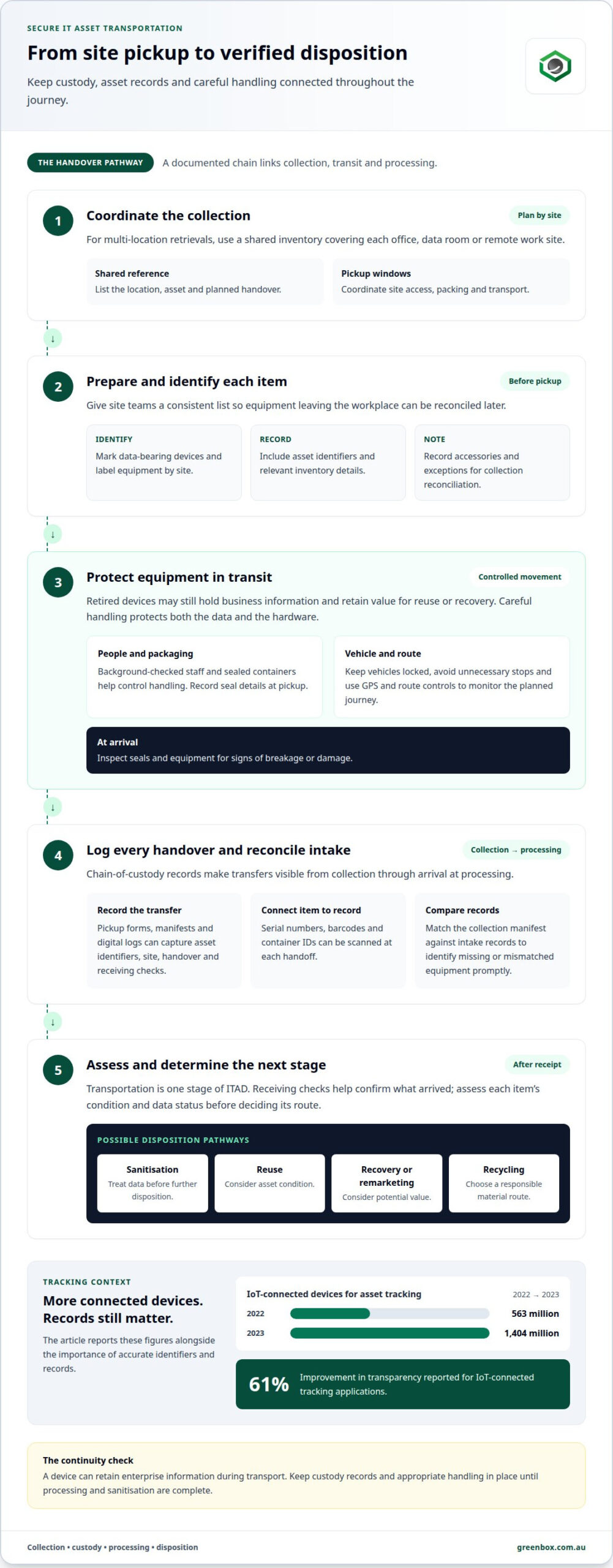
Multi-location retrievals coordinate equipment collection across offices, data rooms and remote work sites. For a large transition, use a shared inventory that identifies each location, asset and planned handover. This gives site teams a consistent reference, while pickup windows help coordinate access, packing and transport.
Before collection, prepare an asset list, identify data-bearing devices and label equipment by site. Record accessories and exceptions so the collection team can reconcile what leaves each location.
Vetted Employees and Sealed Transport
Background-checked staff and secure transport help control who handles equipment and protect it between sites. Sealed containers can make interference more visible, while an arrival inspection can reveal a broken seal or damage. These controls matter because devices may retain business information until processing and sanitisation are complete.
For example, record seal details at pickup and compare them at intake. Keeping vehicles locked and avoiding unnecessary stops adds practical control during transit.
Chain-of-Custody Documentation
Chain-of-custody documentation records asset transfers from collection through arrival at processing. Pickup forms, manifests and digital logs can capture asset identifiers, site, handover and receiving checks. This creates a transparent record when equipment moves between locations or teams.
Tracking can use serial numbers, barcodes and container IDs scanned at each handoff. Reconcile the collection manifest against intake records to identify missing or mismatched equipment promptly.
Why Secure IT Asset Transportation Matters?
Tracking connects each device’s movement with its intended disposition. It supports operational oversight and clearer reporting while equipment is in transit.
Tracking, Reporting and Audit Visibility
Asset tracking links devices to collection and receiving records, giving businesses a clearer view of each handover. Serial numbers, barcodes and container IDs connect an item with its inventory entry and transport record. Scanning at collection and intake helps reconcile what left a site with what arrived. Consistent reports also help identify discrepancies and support reviews of recovery or recycling decisions.
IoT-connected tracking applications were reported to improve transparency by 61%. The number of IoT-connected devices for asset tracking rose from 563 million in 2022 to 1,404 million in 2023. These figures reflect a growing tracking capability, while useful audit visibility still depends on accurate identifiers and records.
GPS Tracking and Route Controls
GPS tracking records a vehicle’s location during a journey, while route controls set and monitor its planned path. Together, they give transport teams visibility and help flag unexpected stops or route changes. Keeping stops brief and vehicles locked can further limit unauthorised access.
For example, a dispatch record can link a vehicle’s route with the load’s container ID. This makes it easier to investigate a delay and establish where a handover occurred.
Comparing Secure Collection with Standard Pickup
Secure collection adds asset-level tracking and documented handovers to the physical removal of equipment. Standard e-waste pickup generally focuses on collecting material for recycling, while secure collection also accounts for devices that may retain business data and have recovery or remarketing potential. The difference lies in the level of custody, reporting and disposition control.
To compare the approaches, consider whether records connect each device to its collection, transport and receiving checks. A documented trail can support operational review and show how equipment moved through processing. For organisations planning e-waste recycling, this visibility helps link collection decisions with the intended outcome.
IT asset lifecycle management and ITAD
IT asset management tracks equipment from acquisition and deployment through active use, retirement and final disposition. ITAD covers the end-of-use stage, linking collection with data treatment and decisions about reuse, recovery or recycling. For example, an organisation retiring office laptops can match each device to its inventory record before collection. This helps teams distinguish retired assets from equipment still assigned to staff.
Retirement doesn’t remove data by itself. A device can retain enterprise information during transport until it has been properly erased, so secure handling must continue after the workplace handover. The National Institute of Standards and Technology (NIST) describes media sanitisation as rendering access to data infeasible for a given level of effort. A receiving check then reconciles collected assets against intake records and flags mismatches for follow-up.
Next, assess each item’s condition and data status before deciding its route. A working laptop may be suitable for reuse or remarketing after appropriate data treatment; damaged equipment may need material recovery. Separate storage for devices awaiting assessment helps prevent a cleared asset being confused with one still holding data. Clear labels such as “awaiting sanitisation” make the next handling decision visible.
For a large transition, connect site inventories, collection records and processing outcomes in one asset management process. A consistent lifecycle record shows which equipment remains in storage, which has completed data treatment and which has reached its intended disposition. This is useful when an organisation coordinates multiple sites or decommissions a data centre. Each handover has a defined owner, and every asset has a recorded next step.
What security certifications should IT asset collection providers have in Australia?
In Australia, assess credentials by their scope and relevance to the work, rather than treating a certificate as proof of every control. Collection, transport, data sanitisation and downstream processing are distinct activities. A credential may apply to a facility or process, so its name alone won’t show which sites, equipment or handling stages it covers.
For example, R2-certified facilities can be relevant to end-of-life electronics processing. Check whether the facility named in the credential is the one receiving the equipment, and whether the documented scope matches the work being performed. A collection process may involve separate locations and handovers, so facility-level certification should be considered alongside transport records and receiving checks.
Look for practical evidence to support a credential: a current certificate, the issuing body, the certified entity, the covered site and the scope. Compare those details with the planned asset journey. If devices travel to another facility, records should show that transfer. If data-bearing hardware has not been cleared, handling procedures should account for it until sanitisation is complete.
Certifications and operational evidence answer different questions. A certification can indicate that a defined system or facility has been assessed; pickup manifests, scan records and intake reconciliations show how a particular collection was handled. For example, compare the collected inventory with the receiving record, then retain the relevant documents with the asset disposition record. The National Institute of Standards and Technology (NIST) describes media sanitisation as making data access infeasible for a given level of effort, a useful distinction when reviewing data-handling controls.
For a secure transition, align collection records, facility credentials and the intended processing outcome before equipment moves. This gives your organisation a clearer basis for reviewing custody and data security throughout the asset journey.
Greenbox: Data Sanitisation and Destruction
Greenbox provides Data Sanitisation and Destruction for businesses managing retired devices that may still hold sensitive information. This is a natural next step after collection: sanitise data-bearing equipment before deciding whether it can be recovered or remarketed.
For example, working hardware may be assessed for IT Asset Recovery or Asset Remarketing after data treatment. Pre-Configuration and Imaging supports preparing equipment for deployment when it suits the organisation’s needs. These options connect secure handling with practical lifecycle decisions, rather than treating collection as the end of the process.
If your organisation is planning an IT asset transition or needs support with data-bearing equipment, contact Greenbox to discuss the next step.
Set the next stage in motion
Your next decision is how retired equipment will move from collection to its intended outcome. A plan for secure logistics for IT asset collection links transport with the work that follows, keeping data handling and asset decisions within the same transition.
Greenbox offers Data Sanitisation and Destruction, IT Asset Recovery and Pre-Configuration and Imaging. These services support organisations managing devices that need secure data treatment, recovery or preparation for deployment. The right pathway depends on equipment condition and operational needs.
For a practical next step, contact Greenbox about secure collection and outline the transition you’re planning. A considered handover can help your team move forward with clarity and confidence.
Frequently Asked Questions
Why Logistics Quality Matters for Multi-Location Enterprises?
Consistent logistics help multi-location enterprises coordinate equipment retirement without disrupting site operations. For example, a business replacing staff laptops across several offices can align collection windows with local access arrangements and device readiness. A shared transition plan clarifies which teams prepare equipment and when, reducing the risk of retired hardware being left unattended or active-use devices collected by mistake.
What does secure IT asset collection include in Australia?
Secure IT asset collection typically combines an agreed pickup plan, careful packing, controlled transport and a defined receiving process. A practical collection may group laptops, monitors and accessories in labelled containers, keeping them separate from devices still in use. Businesses should identify who can release assets at each site and nominate a contact to resolve inventory or access issues on collection day.
How are data-bearing devices securely erased or destroyed after collection?
Data-bearing devices can be sanitised or physically destroyed after collection, depending on the media, condition and required outcome. Greenbox offers Data Sanitisation and Destruction, including wiping, degaussing and shredding. For example, a working laptop may be assessed for sanitisation before recovery, while damaged storage media may require destruction. The chosen method should match the device and the organisation’s data-handling requirements.
What risks arise during IT asset collection, transport, and storage, and how can they be reduced?
Risks include devices being misplaced, accessed without authorisation, damaged in transit or stored before their data status is clear. Businesses can reduce these risks by limiting handling to authorised personnel, protecting equipment from impact and separating assets awaiting sanitisation from cleared devices. At a temporary storage point, clear status labels and controlled access help staff avoid treating every retired device as ready for reuse.
Are there special collection requirements for remote sites, regional areas, or multiple Australian locations?
Collection requirements depend on site access, transport distance, equipment volume and whether devices are held by remote staff. A distributed organisation can prepare site-specific inventories and pickup arrangements under one transition plan. Remote workers need clear packing and return instructions, while site coordinators can manage access and collection readiness. Greenbox serves businesses nationally across Australia.